
Infant Therapy Services
Lactation, Breastfeeding, & Bottle Feeding • Transitioning to Solids • Developmental Support • Sensory Sensitivity • Early Communication

What are infant services?
The early months of your baby's life are filled with incredible growth and sometimes, unexpected challenges. Infant services are specialized, holistic therapy sessions designed to support both you and your baby from birth through 24 months.
You may benefit from infant services if you are noticing things like:
Feeding feels stressful or painful, or your baby struggles to latch, take a bottle, or finish feeds
You're nervous about introducing solids, or your baby is refusing solids
Your baby seems behind on physical milestones such as rolling, sitting, or crawling
Your baby feels floppy or stiff
Your baby reacts strongly to sensory input like diaper changes, sounds, or textures
Your baby is not babbling, pointing, or engaging back and forth
These early concerns are more common than many parents realize. With the right support, small changes can make a big difference for both you and your baby.

Our approach to working with you and your baby:
At Buttonloop, we believe the best outcomes happen when skilled clinicians and families work together collaboratively. We take a holistic approach, looking at the whole baby and the whole family to understand what is really going on.
All of our therapists bring specialized training, allowing them to connect feeding, sensory, and whole-body development, so we can look at how everything works together and build a plan that addresses the full picture, not just one piece of it. That plan always includes simple strategies you can carry over at home and fit into your everyday routines.
Our therapists work with families in a collaborative and supportive way. We are never judgmental. Parenting feels new every time, and we meet you exactly where you are, offering compassionate support and guidance.
And our relationship with families does not end at discharge. Community events and parent programs help you stay connected and supported long after therapy ends.

Meet our Infant Services Lead Therapist & Lactation Counselor
Danielle Gajewski, MS, OTR/L, CLC
Danielle is an occupational therapist and certified lactation counselor specializing in infant feeding and early development. With experience in outpatient pediatrics, early intervention, and NICU settings, Danielle brings deep clinical knowledge and a thoughtful, whole-baby perspective to Buttonloop Infant Services.
She takes a warm, collaborative approach and looks at feeding, movement, and sensory development together to understand the full picture of a baby’s needs. Danielle helps families build confidence with feeding, movement, and early milestones through practical strategies that fit naturally into everyday routines.
Certifications:
ALPP Certified Lactation Counselor · SOS Approach to Feeding · Rhythmic Movement Training Int'l L1 & L2 · Sibshops Certified Facilitator · UNH MS: Occupational Therapy
Infant Services
Lactation Counseling, Breastfeeding Support, Bottle Feeding Support
Common Concerns We Address
Painful latch and sore nipples
Baby not gaining weight
Bottle refusal
Reflux, coughing, choking
Hard to soothe after feeds
Low supply worries
Returning to work
When to introduce a bottle
Oral motor weakness
Tongue/lip tension
Lactation Counseling & Feeding Support
Breastfeeding should not be painful. Bottle feeding should not be a battle.
If you're struggling, it doesn't mean you're doing anything wrong; sometimes you and your baby just need a little extra support.
Our certified lactation counselor works with you to address breastfeeding and bottle feeding challenges so you and your baby can feed with more ease and confidence.
What You Can Expect
A confident, productive feeding routine for you and your baby
Guidance on positions, bottle nipple shapes, and pump products
Support for caregivers who are taking on the feeding role
Less second-guessing, more trusting yourself
A calmer, fed baby
Together, we find positions, tools, and routines that work for your family so that feeding can feel easier and more confident.

Transitioning to Solids
Starting solids is a big milestone, but it's not always smooth, and it can bring a lot of questions. Some babies eagerly explore new foods while others gag, refuse textures, or seem uninterested in eating.
Our approach is individualized, play-based, and low-pressure. We meet your child where they are, set realistic goals, and adjust as you go because no two babies (or families) are the same.
Here’s what you can expect when working with one of our feeding therapists:
A clear, manageable plan to expand your baby's diet at their own pace
Techniques to make mealtimes calmer and more enjoyable for everyone
The confidence to feed your baby — without the daily guesswork
Home strategies you can put into practice immediately

Developmental Support
Babies develop at their own pace, but sometimes extra support helps them move forward with more confidence. Whether you've noticed your baby isn't rolling, sitting, or crawling when expected, or your pediatrician has flagged a concern, early support makes a meaningful difference.
Developmental support focuses on helping babies build the strength, coordination, and motor skills needed for early milestones.
Therapy focused on your baby’s physical development will help them:
Build strength for rolling, sitting, crawling, and early walking
Develop comfort and endurance during tummy time and floor play
Improve muscle strength and body stability for movement and play
Use both sides of the body together during movement and exploration

Sensory Sensitivity and Regulation
Some babies are more sensitive to the world around them, and that's okay. Big reactions to diaper changes, meltdowns after loud noises, difficulty calming down, or avoiding certain textures are signs that your baby's sensory system may need some extra support.
Sensory support focuses on helping babies process and respond to sensory input in ways that support calm, engagement, and daily routines.
Therapy focused on your baby’s sensory development will help them:
Feel more comfortable with touch, movement, and everyday care routines
Build tolerance for different textures, sounds, and sensory experiences
Develop skills for calming and regulating their body
Engage more comfortably in play, feeding, and daily activities
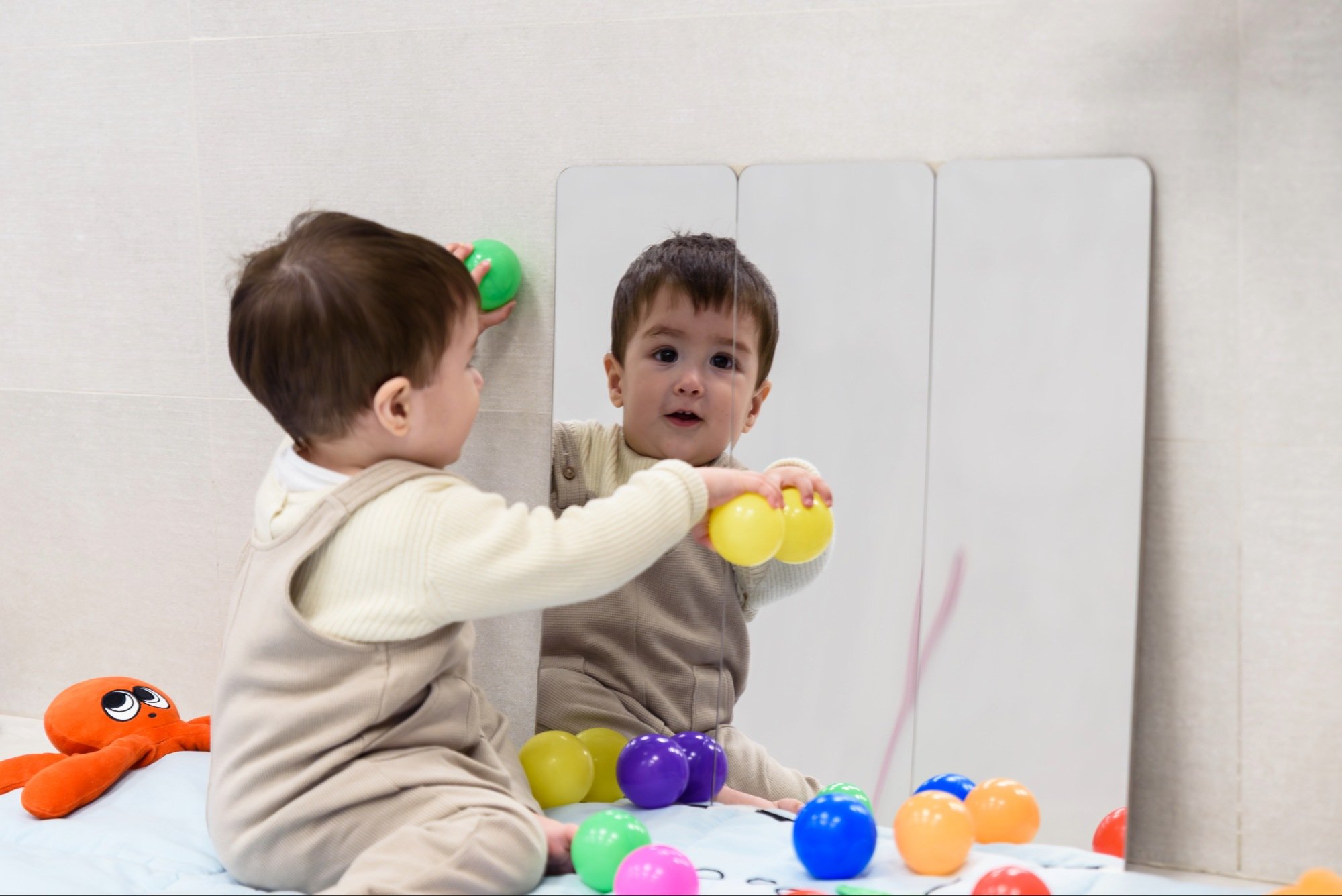
Early Communication Support
Communication begins long before a baby says their first words. If your baby is not babbling, pointing, or engaging back and forth yet, early support can help build the foundation for communication.
Early communication support focuses on helping babies develop the social interaction and foundational communication skills that lead to speech and language.
Therapy focused on your baby’s early communication development will help them:
Develop babbling, sounds, and early vocal play
Build back-and-forth interaction during play and daily routines
Use gestures like pointing, reaching, and showing to communicate
Strengthen connection, engagement, and early language development